How to play blackjack, and the real odds
Blackjack has the lowest house edge of any game on the casino floor, but only if you understand the rules and play each hand correctly. This guide takes you from “what are the cards worth?” to reading a table's odds like a pro, with the edge numbers computed by our own solver.
What this guide covers
We'll start from absolute scratch (the goal, the card values, how a hand plays out) then build up to the part most guides skip: what the odds actually are, and how every rule on the felt nudges them for or against you. Wherever we quote a house-edge number, it comes from our own analytic solver, not a rule of thumb. If you already know the basics, jump straight to the odds or how the rules move the edge.
1. The goal & card values
The goal is simple: get a hand total closer to 21 than the dealer, without going over 21 (“busting”). You're playing against the dealer only, not the other players at the table.
- 2 through 10 are worth their face value.
- Jack, Queen, King are each worth 10.
- Ace is worth 11 or 1, whichever helps your hand more. A hand with an ace counted as 11 is called a “soft” hand (e.g. Ace + 6 = “soft 17”), because it can't bust on the next card: the ace just drops to 1.
A “blackjack” (or “natural”) is an ace plus any ten-value card on your first two cards, 21 on the deal. It's the best hand there is, and it usually pays extra (more on that below).
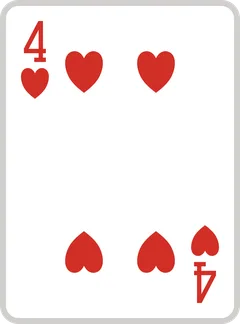
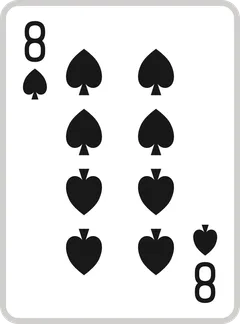
2–10 = face value
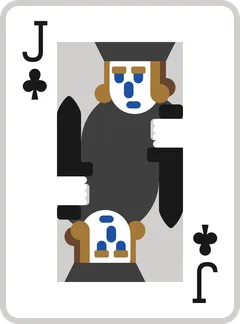
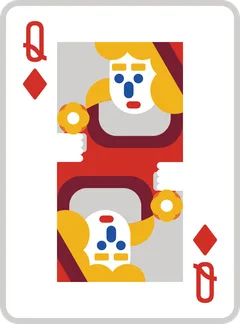
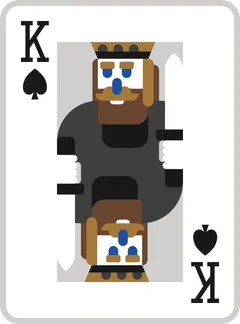
J / Q / K = 10
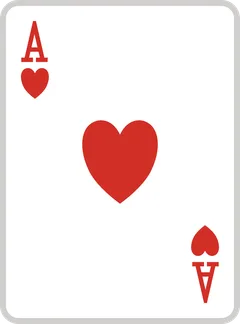
Ace = 1 or 11
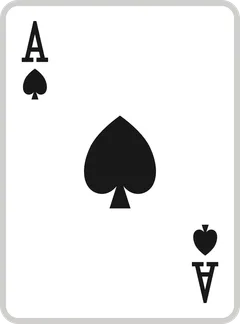
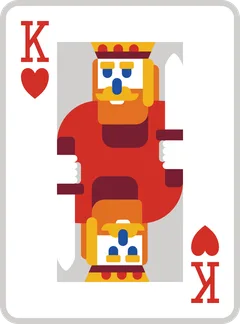
Blackjack! (A + ten)
2. How a hand plays out
- You place a bet. The dealer deals everyone two cards face up, and themselves one card up (the “upcard”) and one face down (the “hole card”).
- If your first two cards are a blackjack, you're usually paid immediately (unless the dealer also shows a potential blackjack).
- Otherwise it's your turn: you act on your hand (hit, stand, double, split; see below) until you stand or bust.
- Then the dealer reveals the hole card and plays by a fixed rule: they must keep drawing until they reach 17 or more. The dealer has no choices, they follow the rule every time.
- Whoever is closer to 21 wins. Tie = “push” (your bet is returned). If you bust, you lose immediately, even if the dealer busts afterward. That “you act first” asymmetry is where the house edge comes from.
One rule to check at every table: does the dealer hit or stand on a soft 17? “Stands on soft 17” (S17) is better for you; “hits soft 17” (H17) is worse. We'll quantify it in section 5.
3. Your options: hit, stand, double, split, surrender, insurance
On your turn you'll choose from these (which ones are offered depends on your hand and the table rules):
- Hit, take another card. You can keep hitting until you stand or bust.
- Stand: keep your total and end your turn.
- Double down: double your bet in exchange for exactly one more card. Best on strong starting totals (9–11). Some tables only let you double on certain totals.
- Split: if your two cards are a pair, split them into two separate hands with a second equal bet, then play each on its own. Split aces usually get just one card each.
- Surrender, where offered, give up the hand and get half your bet back. Useful on the worst hands (like hard 16 vs a dealer 10). Many tables don't offer it.
- Insurance: a side bet offered when the dealer shows an ace, paying 2:1 if the dealer has blackjack. It looks tempting and it's almost always a bad bet, decline it.
Two of these trip up beginners the most, here's what they actually look like:
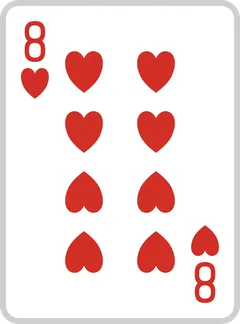
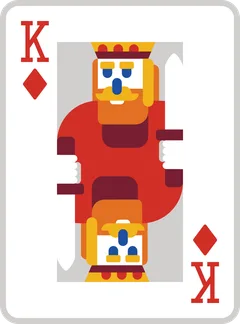
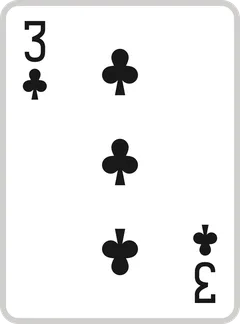
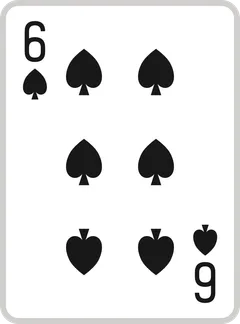
Want to feel how these play out? The free play table deals real hands and only shows you the actions that are legal for each situation.
4. The odds: house edge & RTP
Two numbers describe a game's math. The house edge is the casino's long-run advantage, the share of each bet you'd expect to lose on average. RTP (“return to player”) is just the flip side: RTP = 100% − house edge.
Played with computer-perfect basic strategy, our default game's house edge is about 0.57%: meaning an RTP of roughly 99.43%. That's among the lowest edges in the entire casino. But notice the catch hiding in “played perfectly”: that number assumes you make the mathematically correct decision on every hand. Play by gut and the edge climbs fast.
5. How the rules move the edge
No two blackjack tables are identical, and the fine print on the felt is worth real money. Below is our default rule set, unlimited decks, dealer stands on soft 17, blackjack pays 3:2, double after split allowed, double on any two cards, split once, and what happens to the edge when you change one rule at a time. Every figure here is computed by our solver at build time.
| Rule (vs. our baseline) | House edge | Change |
|---|---|---|
| Baseline: unlimited deck · S17 · 3:2 · DAS · double any two · split once | 0.57% | n/a |
| Dealer hits soft 17 (H17) | 0.79% | +0.22% (worse) |
| Blackjack pays 6:5 instead of 3:2 | 1.92% | +1.35% (worse) |
| No double after split | 0.69% | +0.12% (worse) |
| Double only on 9–11 | 0.66% | +0.09% (worse) |
| Double only on 10–11 | 0.74% | +0.17% (worse) |
| Late surrender allowed | 0.48% | −0.09% (better) |
Try any of these yourself: flip the same toggles in the Lab and watch the simulated edge land on these numbers.
A winning $10 blackjack pays:
What about the number of decks?
Holding every other rule the same, fewer decks slightly favor the player. With our liberal baseline rules, playing perfect basic strategy on a fresh shoe, the deck count alone moves the edge like this:
| Decks (rules held at baseline) | House edge |
|---|---|
| 1 deck | −0.09% |
| 2 decks | +0.24% |
| 6 decks | +0.46% |
| 8 decks | +0.49% |
| Unlimited (our default) | +0.57% |
These are basic-strategy, fresh-shoe figures read from the Lab's own finite-edge table, so the guide and the simulator always agree. A negative figure is a small player edge: a single deck sits around 0.09% in the player's favor on a fresh shoe (and a depleting cut-shoe can land a touch differently). Important caveat: casinos know single- and double-deck games favor the player, so they almost always offset them with stingier rules, usually 6:5 payouts and H17. A “single deck” sign is often a trap; the payout matters far more than the deck count.
6. Basic strategy (and the cost of deviating)
Basic strategy is the complete set of mathematically optimal decisions, for every combination of your hand and the dealer's upcard, it tells you the single play (hit/stand/double/split/ surrender) with the best long-run expected value. It isn't a betting system or a guess; it's the proven answer, and it's what gets the edge down to that ~0.57%.
Every time you deviate: standing on a 16 you should hit, skipping a double you should take, “having a feeling”: you hand a little edge back to the house. Those small leaks add up across a session far more than most players realize. The good news: it's completely learnable, because it never changes for a given rule set.
7. Bankroll & variance: the swings are real
Here's the part nobody warns beginners about. Blackjack has one of the best odds in the house, and some of the biggest short-term swings. A tiny edge means the long-run average is close to break-even, but any single session is dominated by variance: streaks, runs, and cold stretches that have nothing to do with skill.
This is why bankroll management matters more than any betting trick. Play with money you can afford to lose, size your bets small relative to your bankroll so a normal losing streak can't wipe you out, and judge yourself on whether you played correctly, not on whether you won. Even perfect basic strategy loses plenty of individual sessions.
8. A word on card counting
You've probably heard that card counting can flip blackjack in the player's favor. It's real: by tracking the ratio of high to low cards remaining and betting more when the deck is rich in tens and aces, skilled counters can gain a small long-run edge. But it's a discipline, not a trick: it takes practice, a real bankroll, finite-deck games (it does nothing against an “unlimited”/continuously-shuffled shoe), and it's useless in a no-money learning environment like this one.
We're planning a dedicated card-counting trainer plus articles and simulators down the road for anyone who wants to go deeper. For now, master basic strategy first: it's the foundation everything else builds on.
9. Next steps
How this simulation works
- Rules modeled
- House-edge figures assume our default rule set unless noted: unlimited decks, dealer stands on soft 17, blackjack pays 3:2, double after split allowed, double on any two cards, split once, US hole-card peek, no surrender. Each rule-variation row changes exactly one rule from that baseline.
- Assumptions
- The player follows computer-perfect basic strategy for the exact rules shown. Flat bets. Rule-variation figures use the independent-draw infinite-deck model (the model our default game uses); deck-count figures use a fresh-shoe finite-deck model (basic strategy).
- Mathematical basis
- House-edge numbers come from our analytic EV solver (dealer outcome distribution → player expected value). It is exact for the unlimited (independent-draw) model used by the rule-variation table; the finite-deck (deck-count) figures are a close analytical estimate (finite splits and post-peek draws are approximated). Rule-variation rows are computed live at build time; deck-count figures are computed offline with the same solver because the finite solve is far slower.
- Engine version
- blackjack 0.4 · rules artifact 2026-06-21
- Validation
- 137 fast regression tests, 4 high-sample validation tests, and a regenerated 240-rule finite-edge table; last independently reviewed 2026-06-21 (5 review passes).
- Last reviewed
- 2026-06-21
All Blackjack guides →; the full library, from the basics to the edge cases.